




















Dalai khiid
Read in Mongolian
Name(s) of Temple :
Dalai khiid,Dalain khiid,
Rinchen Number :
756
Rinchen Name :
Dalain khural
Type of Monastery/Temple:
Monastic City
Aimag where the temple is located:
Dundgovi
Sum where the temple is located:
Olziit soum
Old Aimag Name :
Tusheet Khan
Old Khoshuu Name :
Govi Tüshee günii khoshuu
Historical Summary (In Mongolian only):
Дундговь аймаг Далайн хурал Өлзийт сумын төвөөс баруун урагш 110 км орчимд Хөнжлийн уулын өвөрт 5-6 дугантай, 50-70 лам суудаг хийд байжээ. Гол шүтээн нь Говийн Лха тахидаг, 21 баг бүхий цам гаргадаг / зуны эхэн сард / мөн зуны адаг сард ганжуур эргэдэг хурал байжээ. Далайн хурал нь үүсгэн байгуулагч тодорхойгүй , 18-р зууны сүүлч үеэр байгуулагдаад 1937 оны эхээр хаагджээ. Далайн хурлын ойролцоо Их хүрээ, Бээжингийн өртөө замын томоохон буудал / өртөө / байсан тул олны хөлийн газарт нилээд ойр байжээ. Зарим эх сурьалжид Далайн хурлыг өртөө хурал гэж тэмдэглэсэн байна. /Өлзийт сумын иргэн өндөр настан 89 настай Сэрээтэр гуайтай хийсэн ярилцлага/
Description of location :
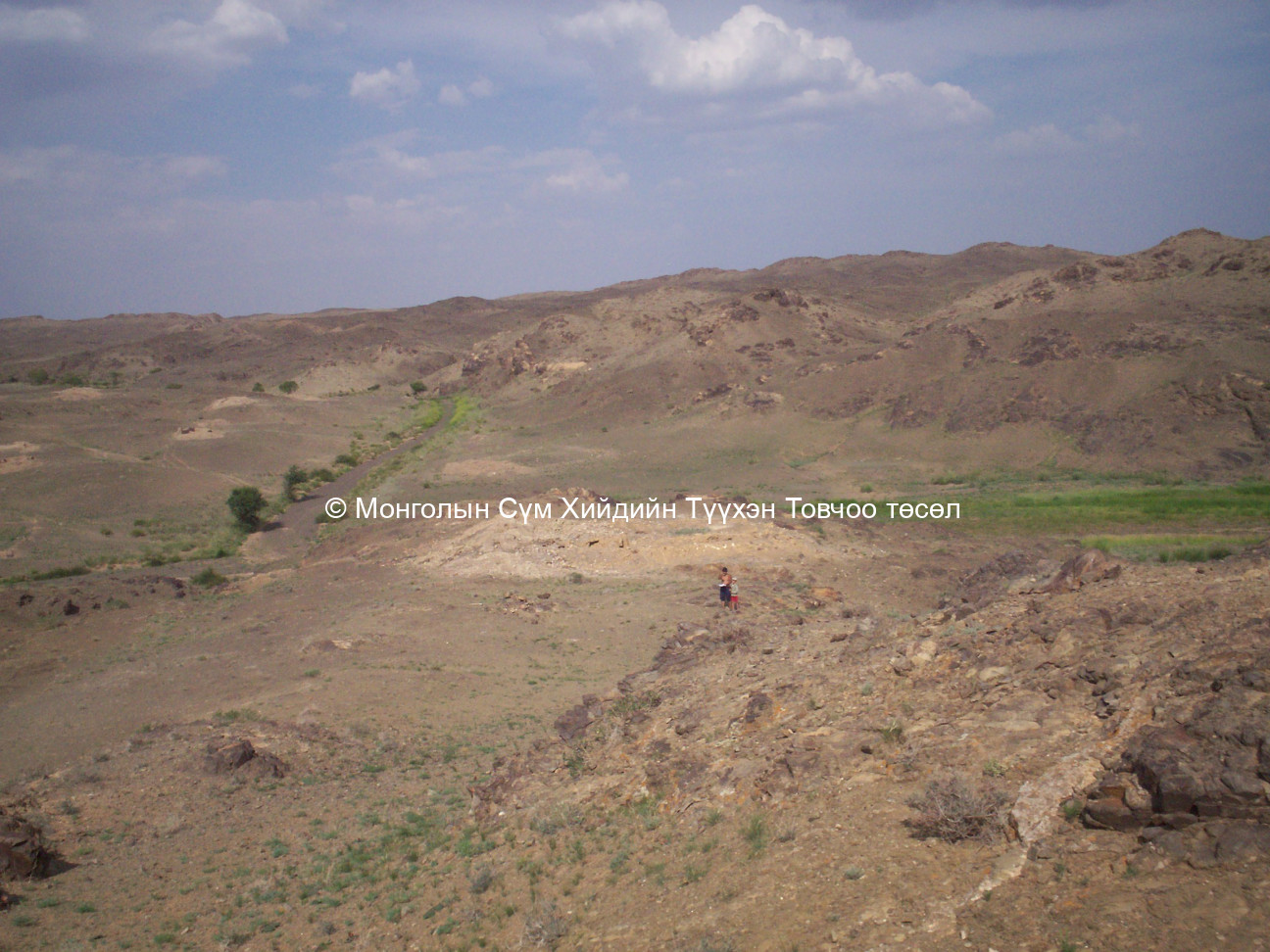
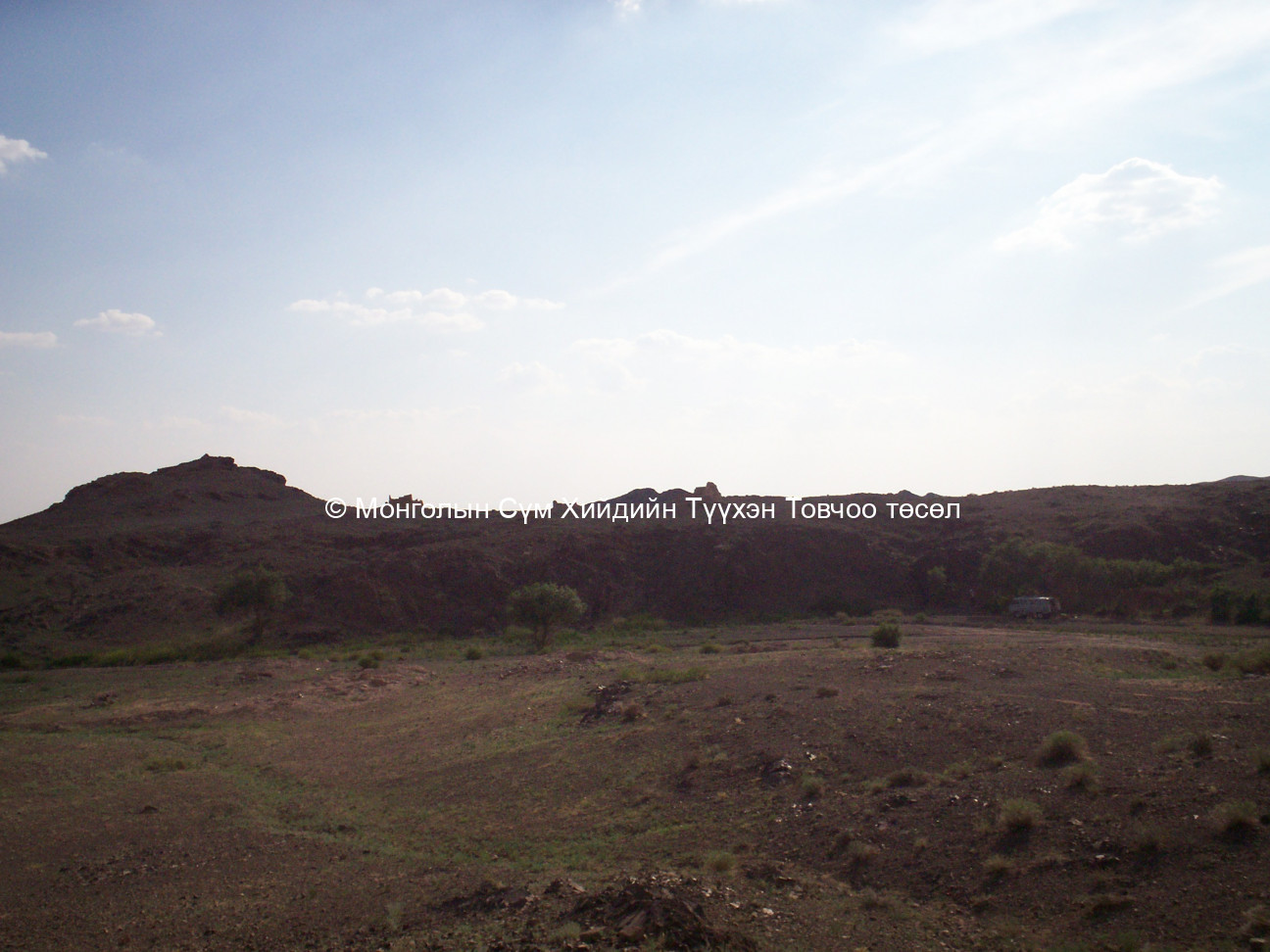
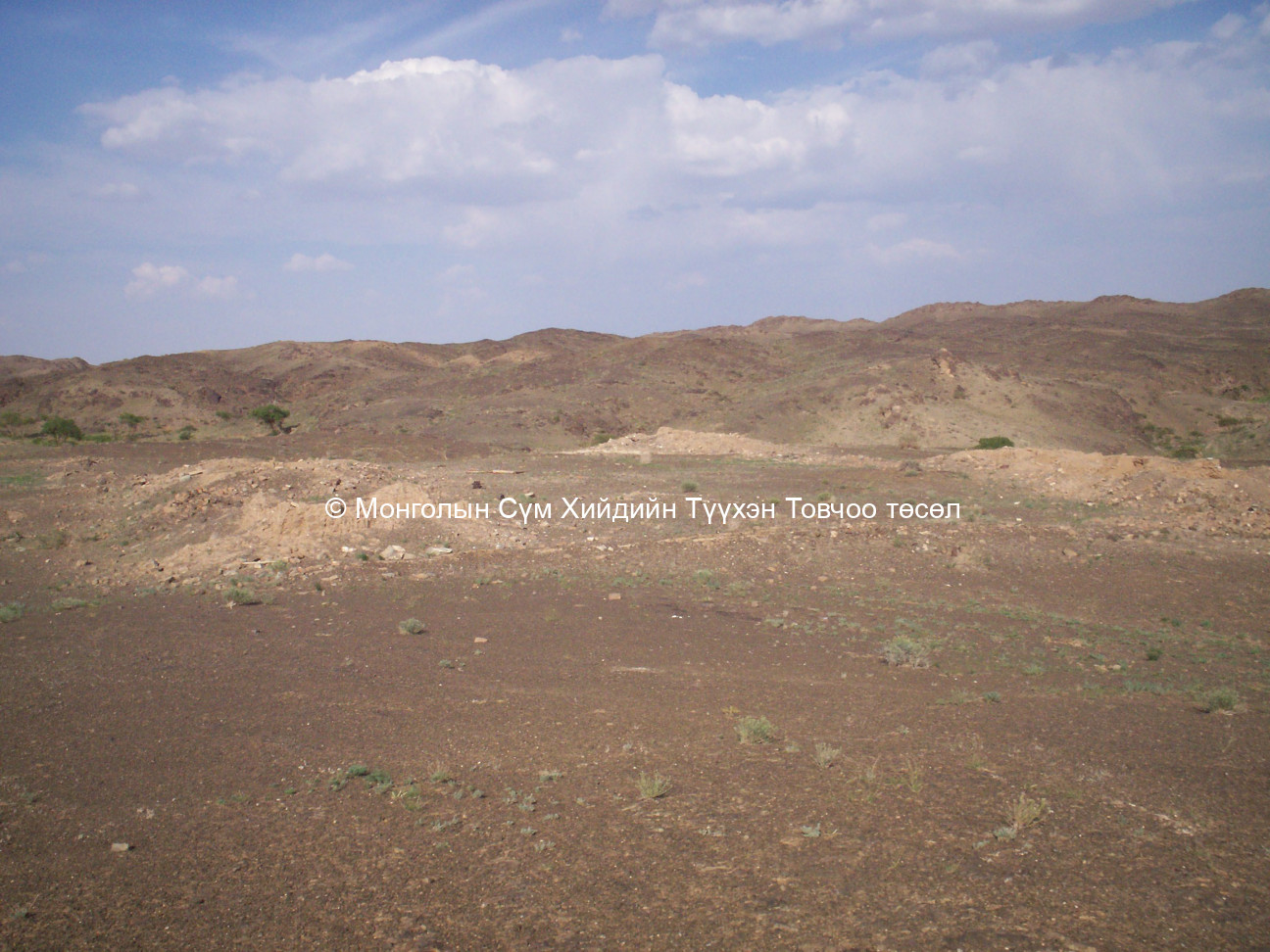
Location is south of Khunjliin mountain and 110 kilometers southwest of the sum centre.
GPS coordinates :
North 44° 12’ East 106° 03’
Total site area:
Side1: Side2: Side3: Side4: Side5: Side6:
Revived temple on site :
No
Site status at the time of survey :
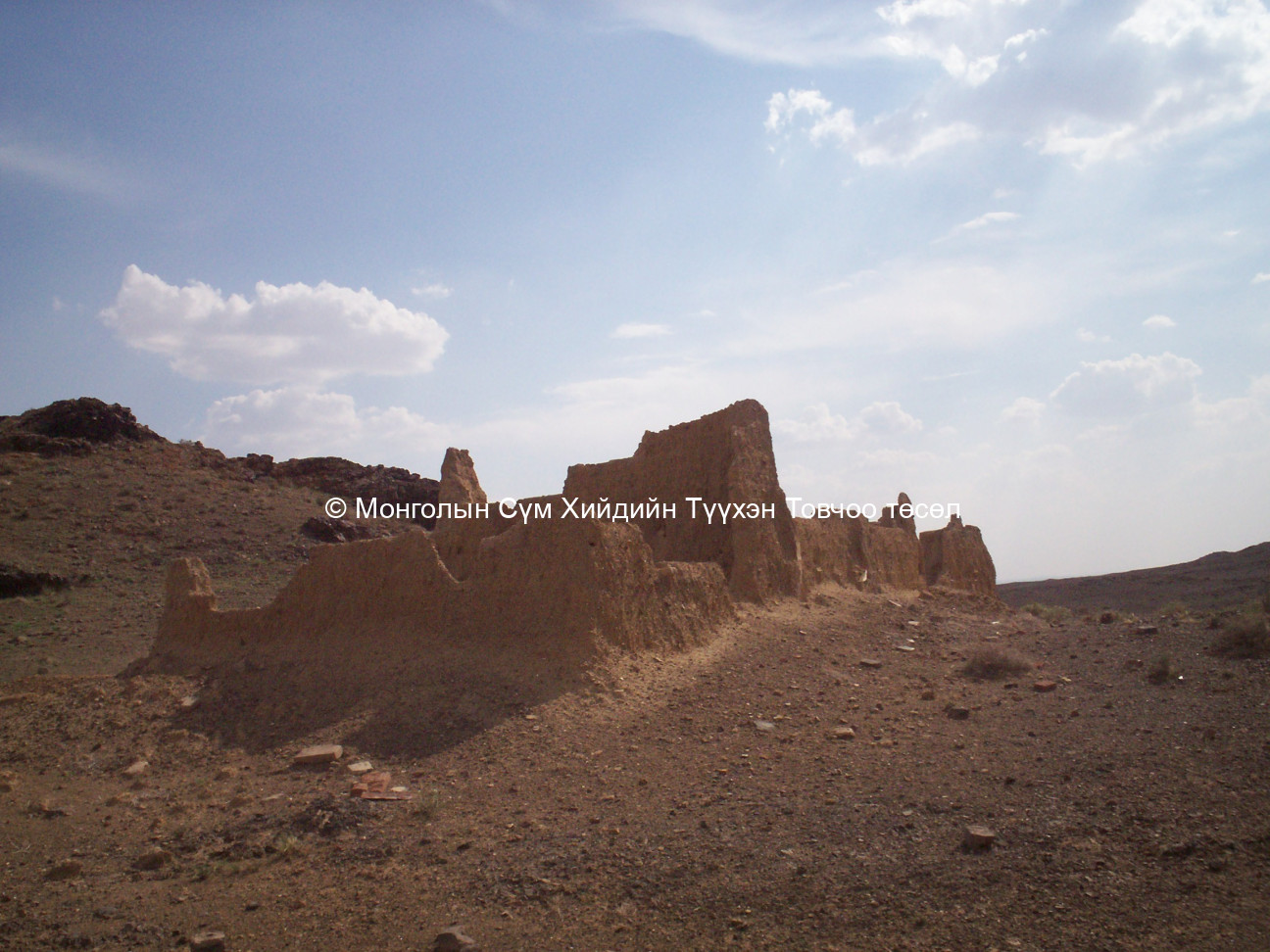
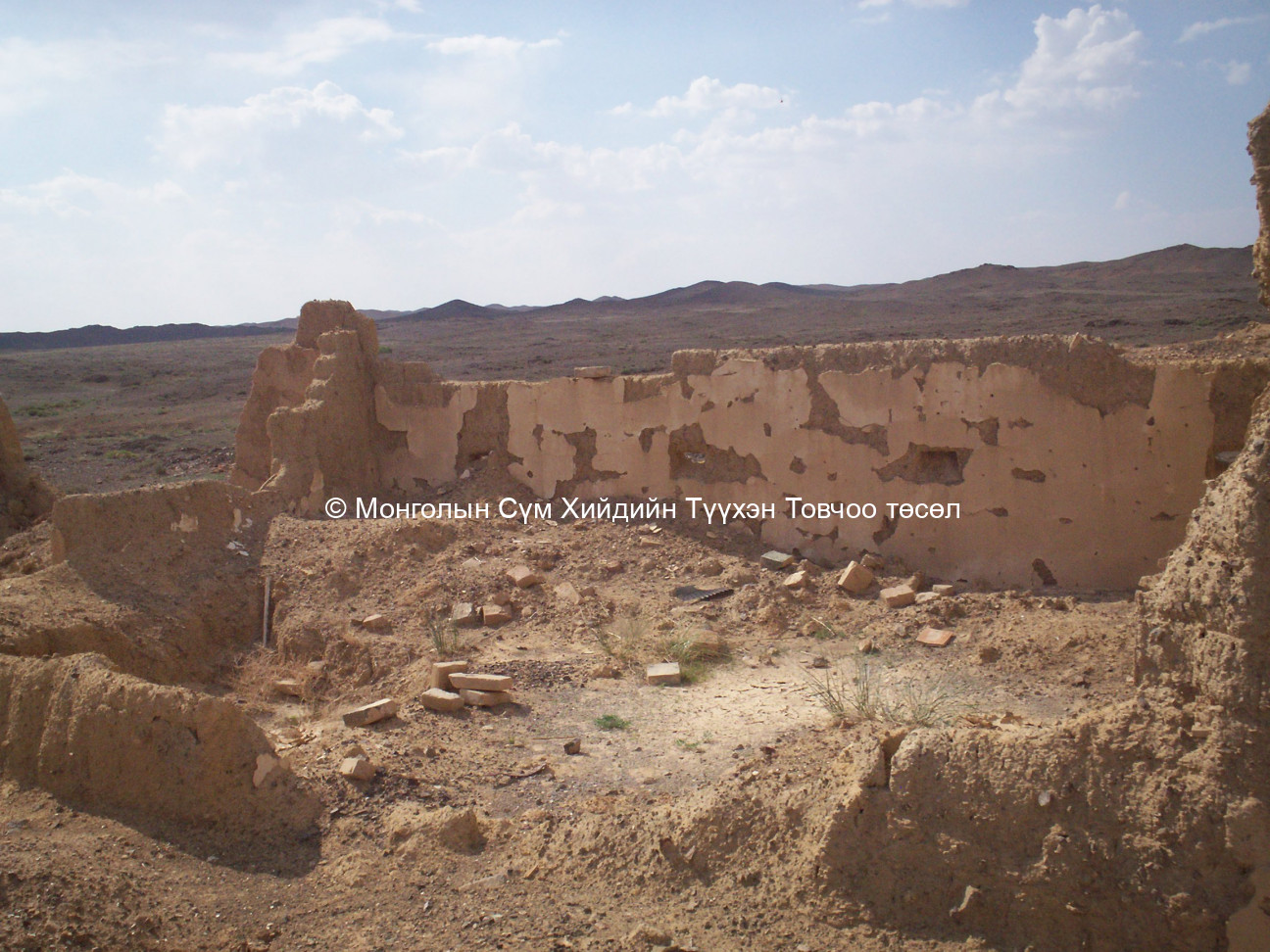
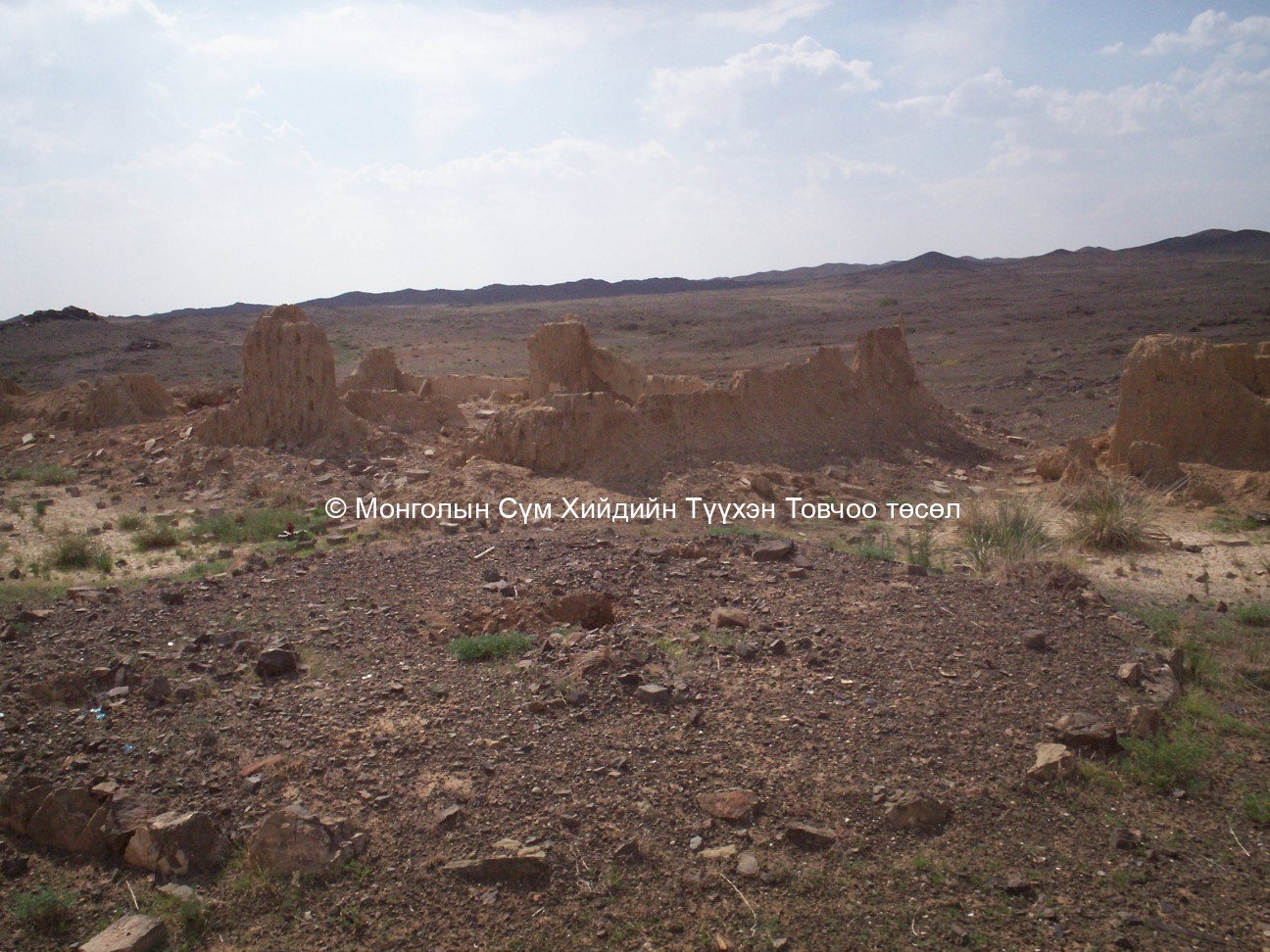
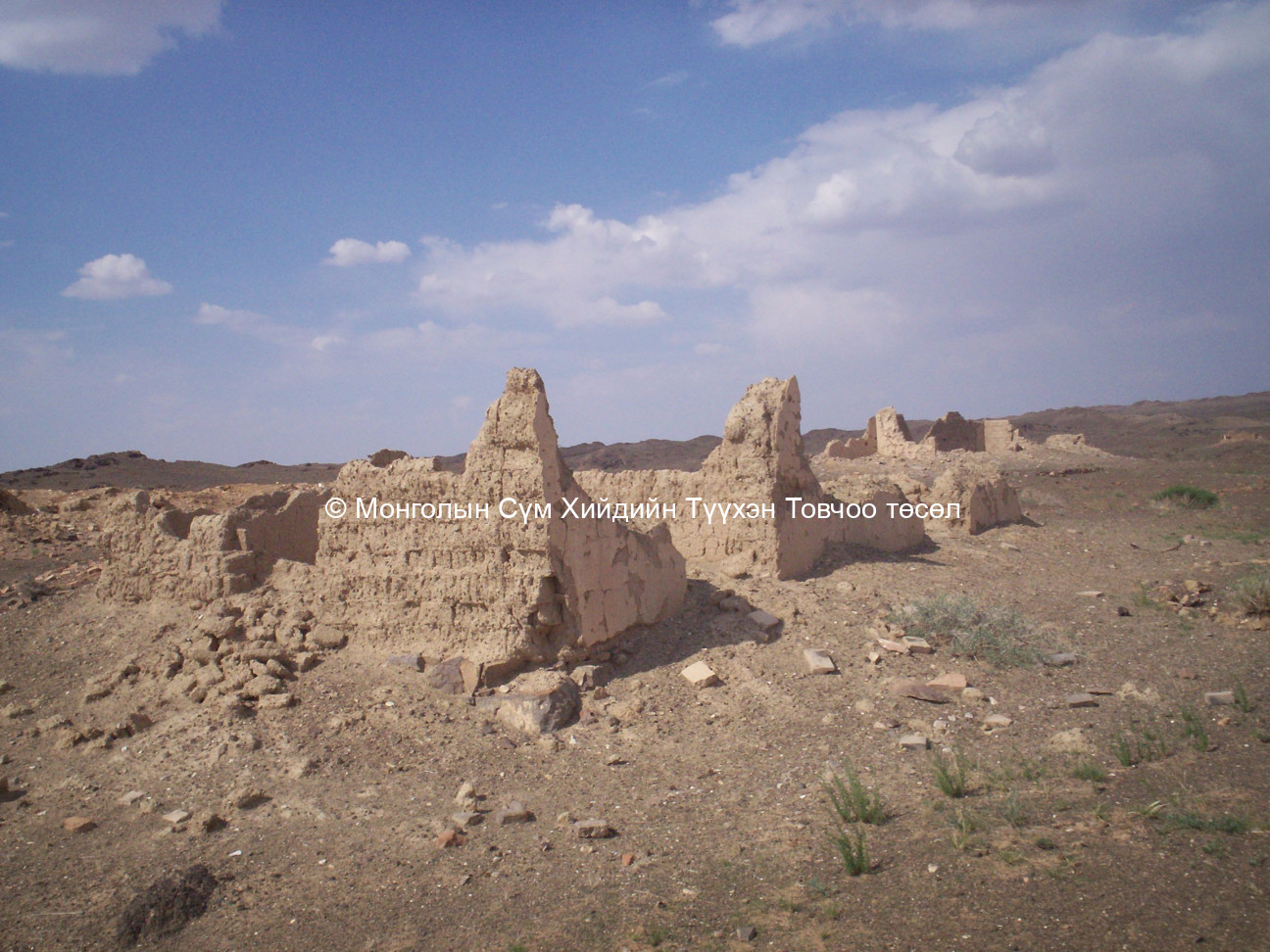
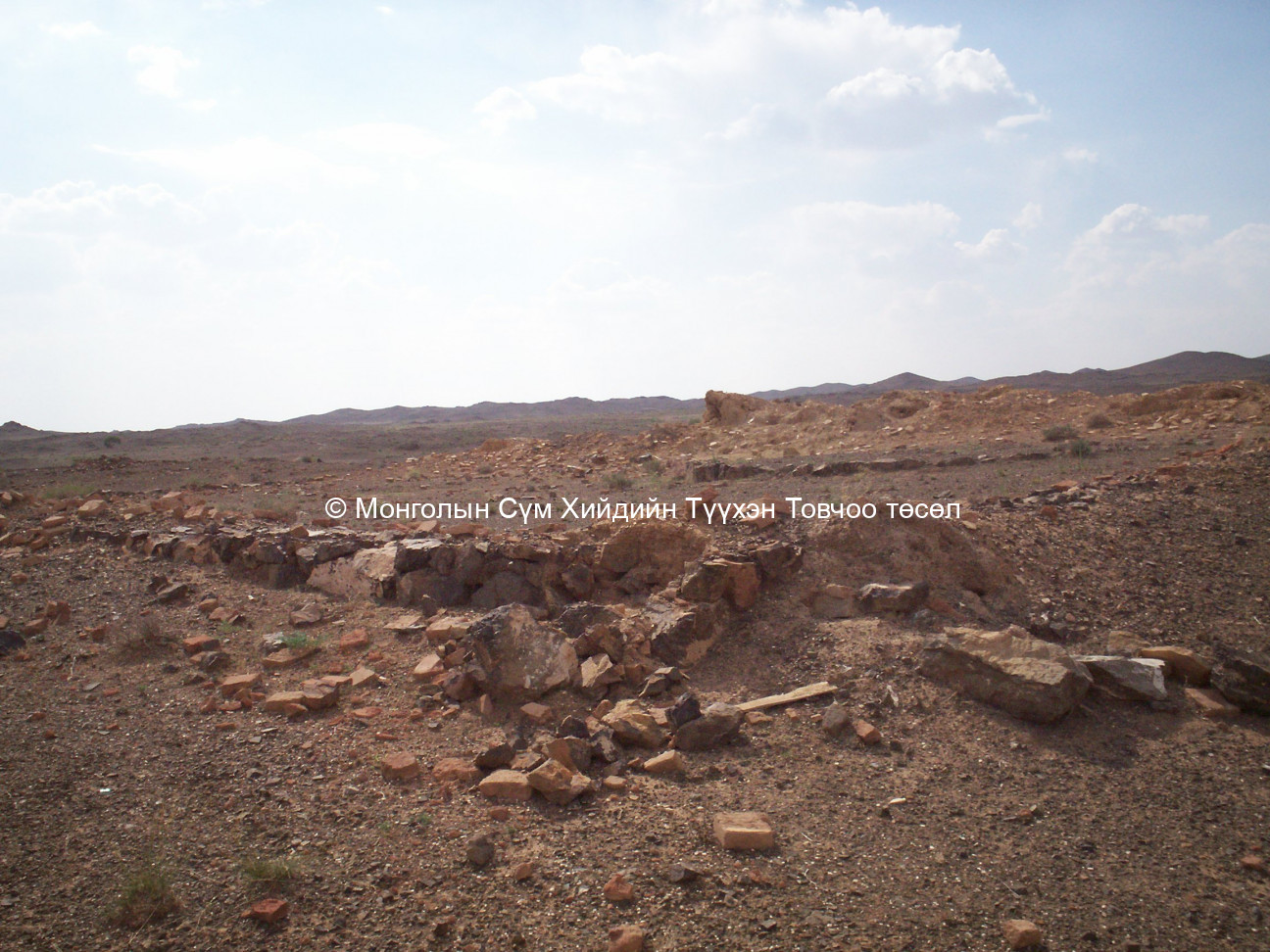
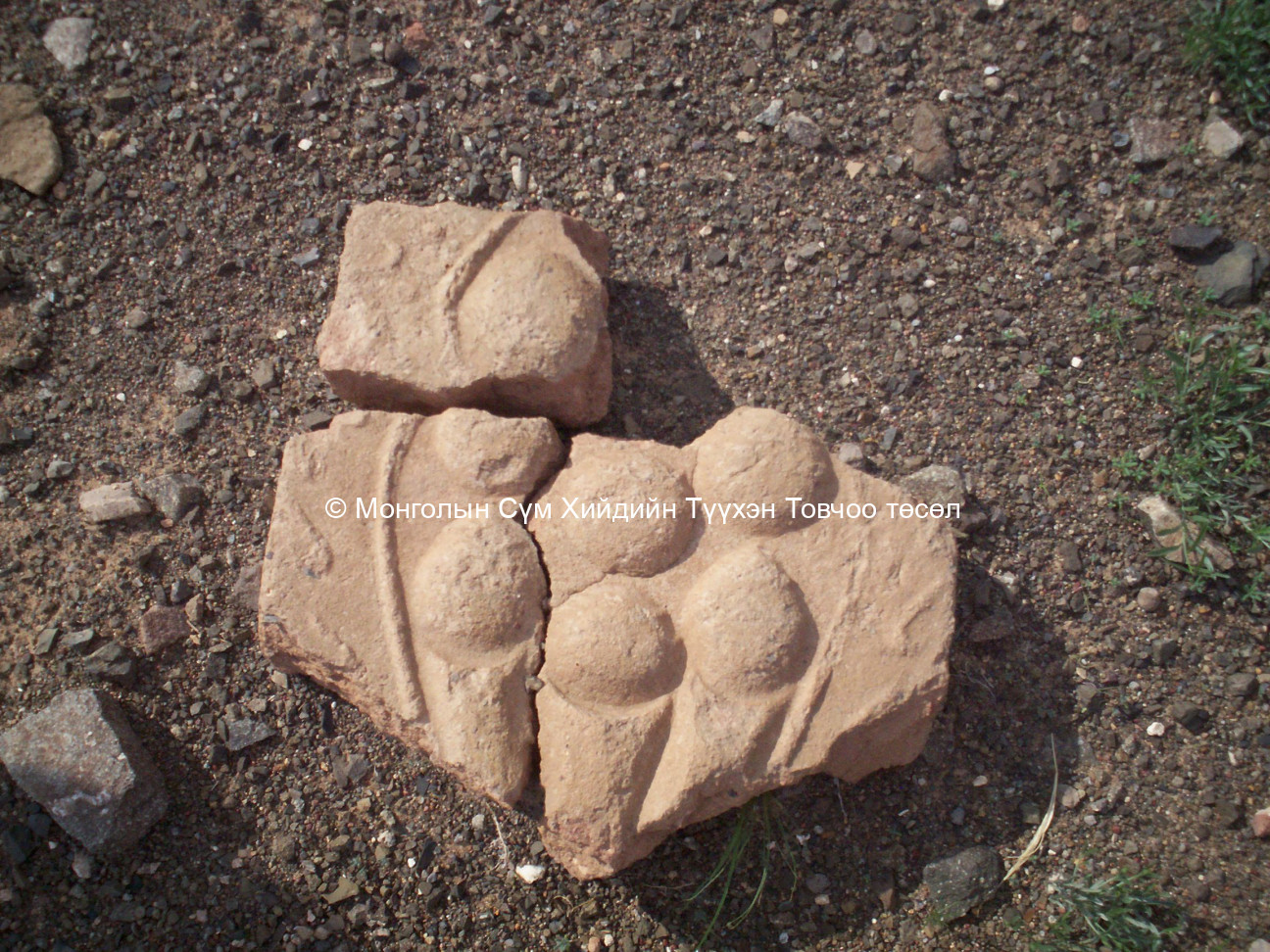
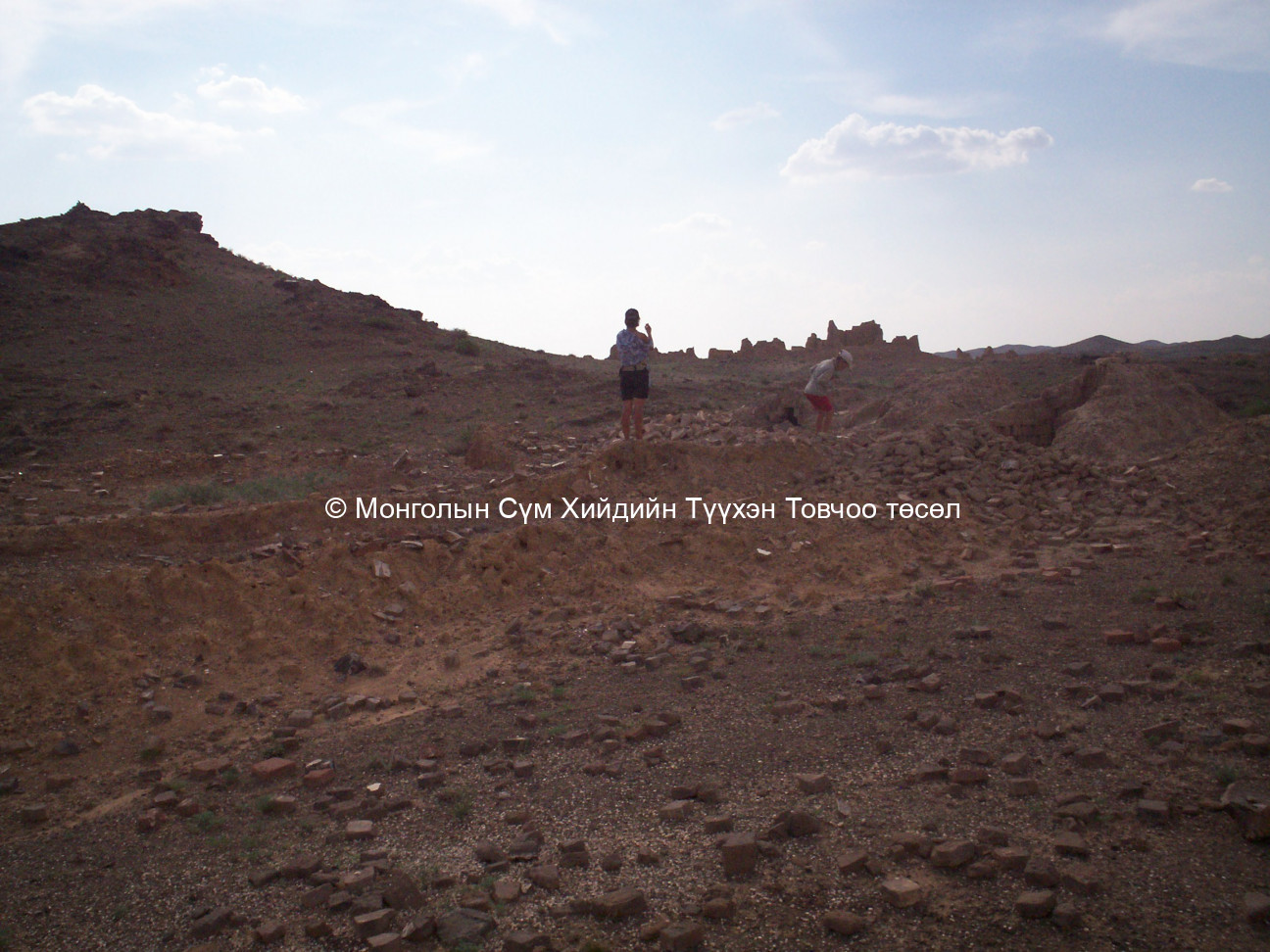
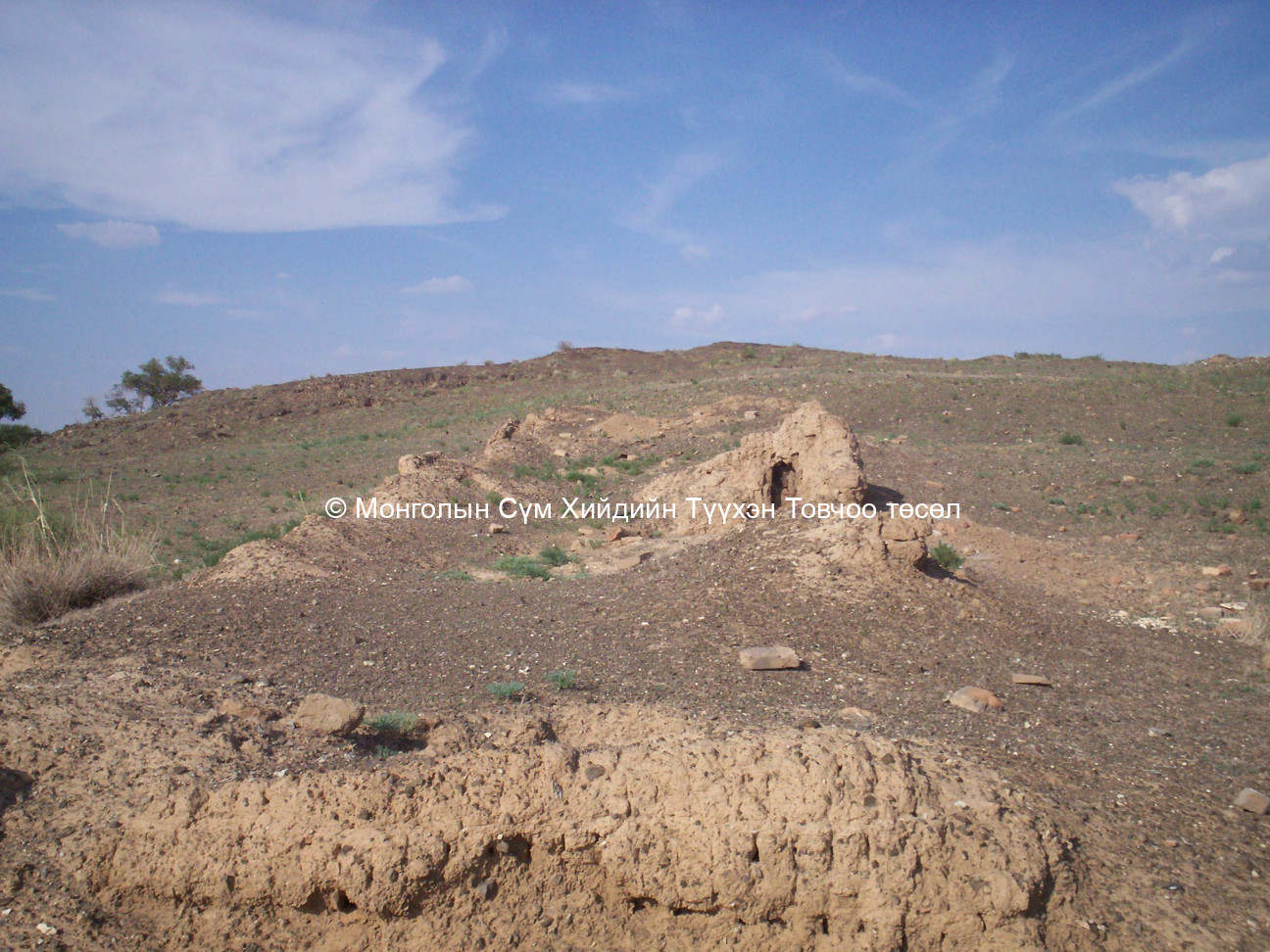
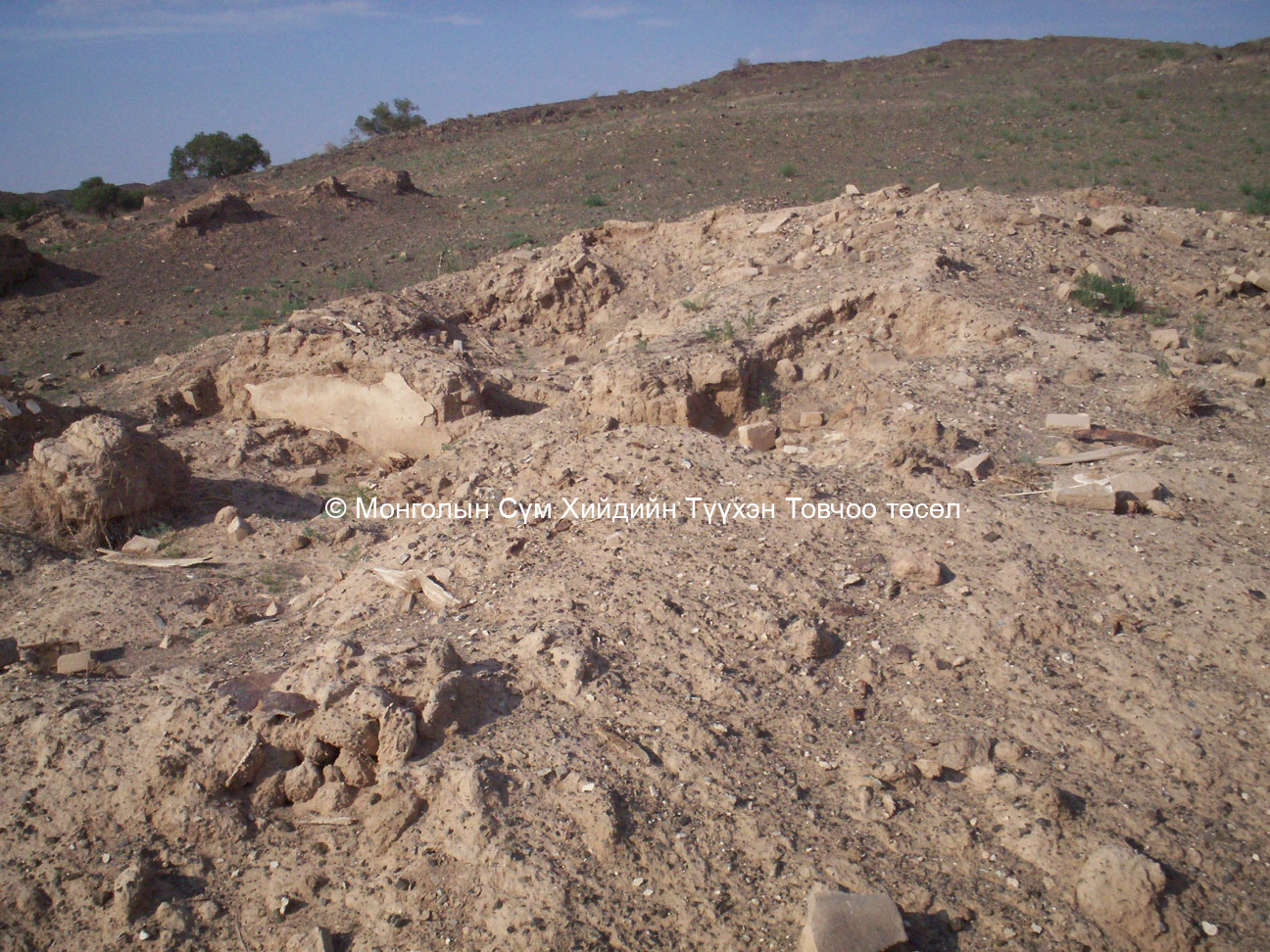
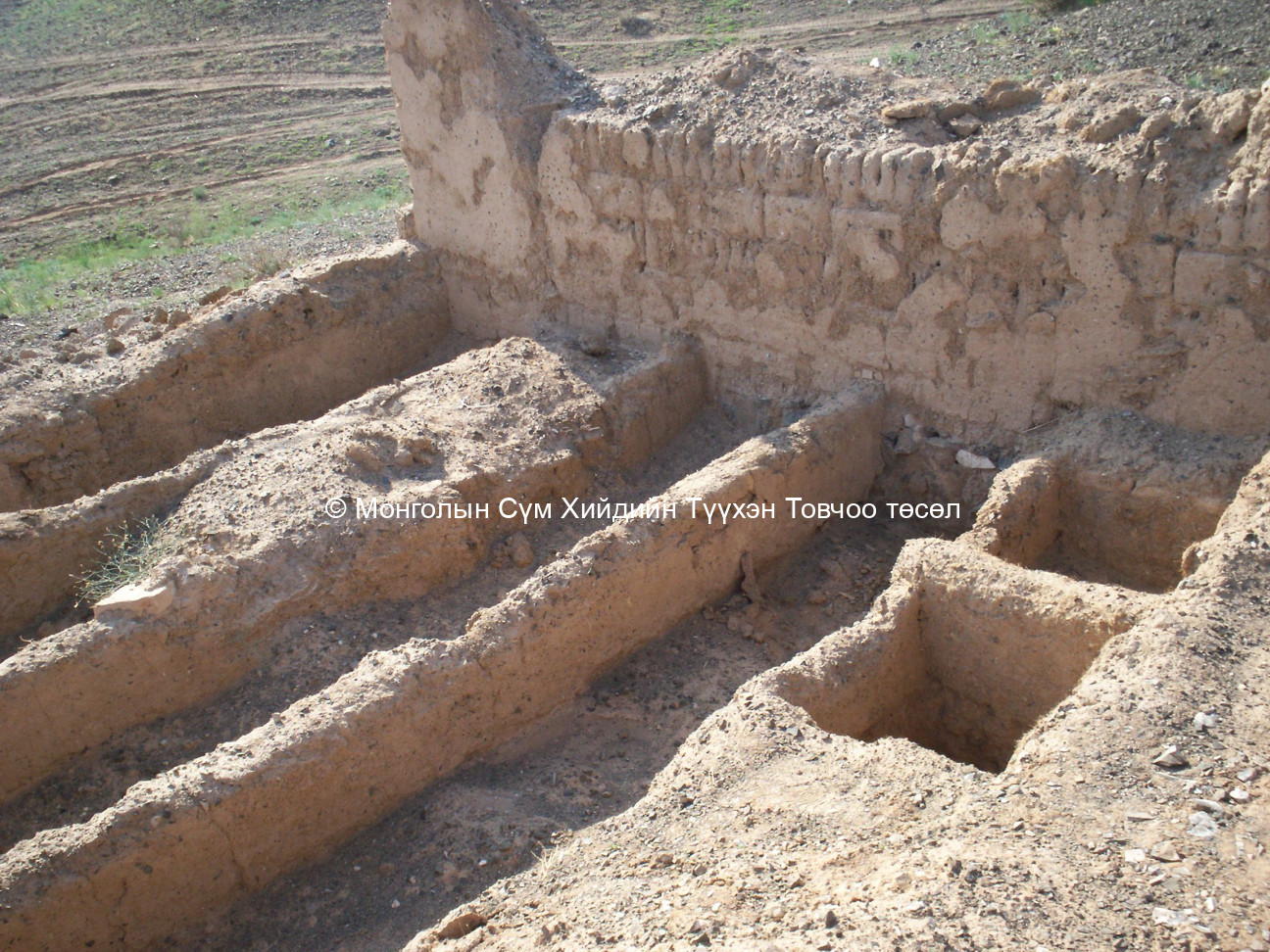
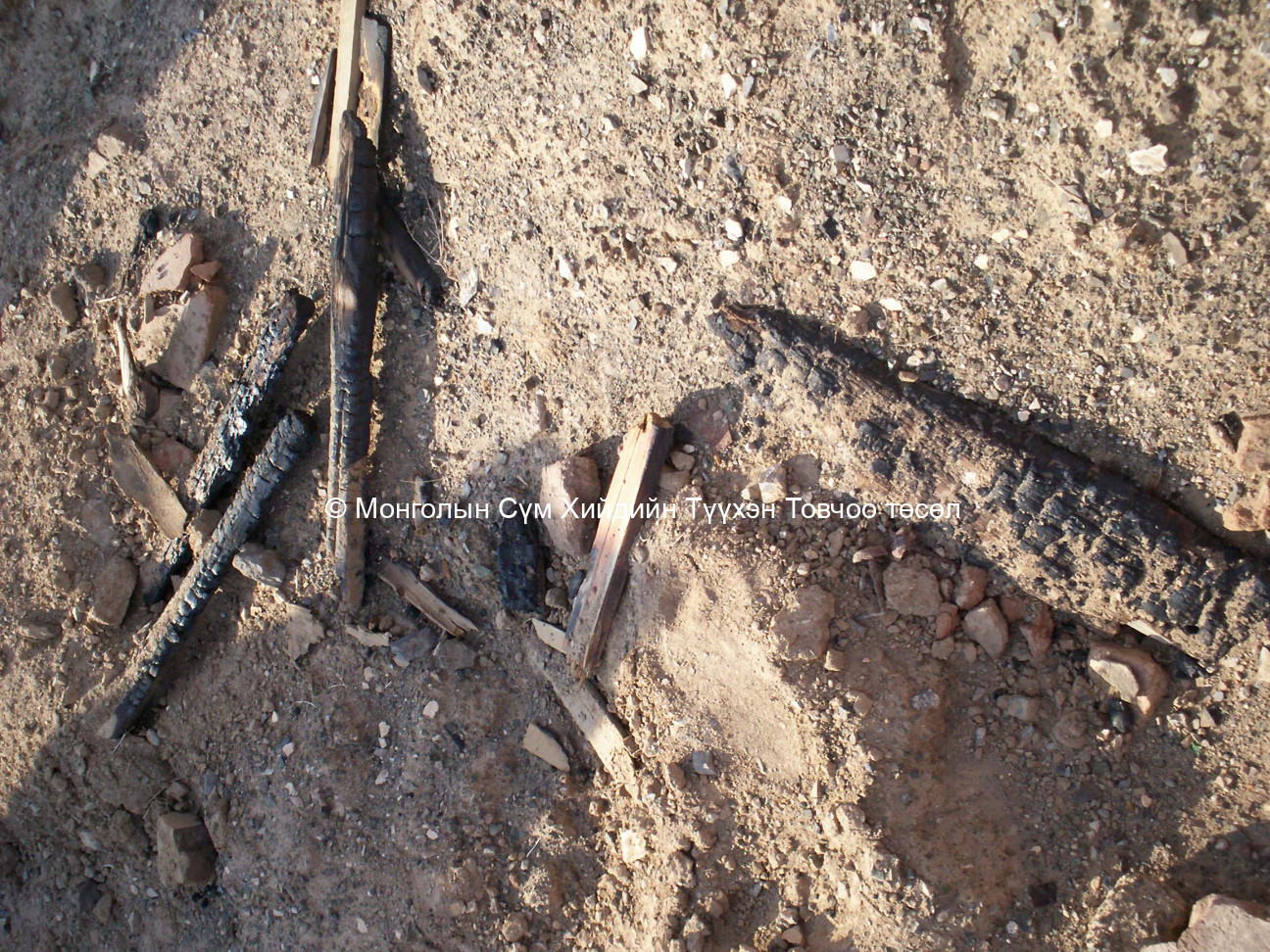
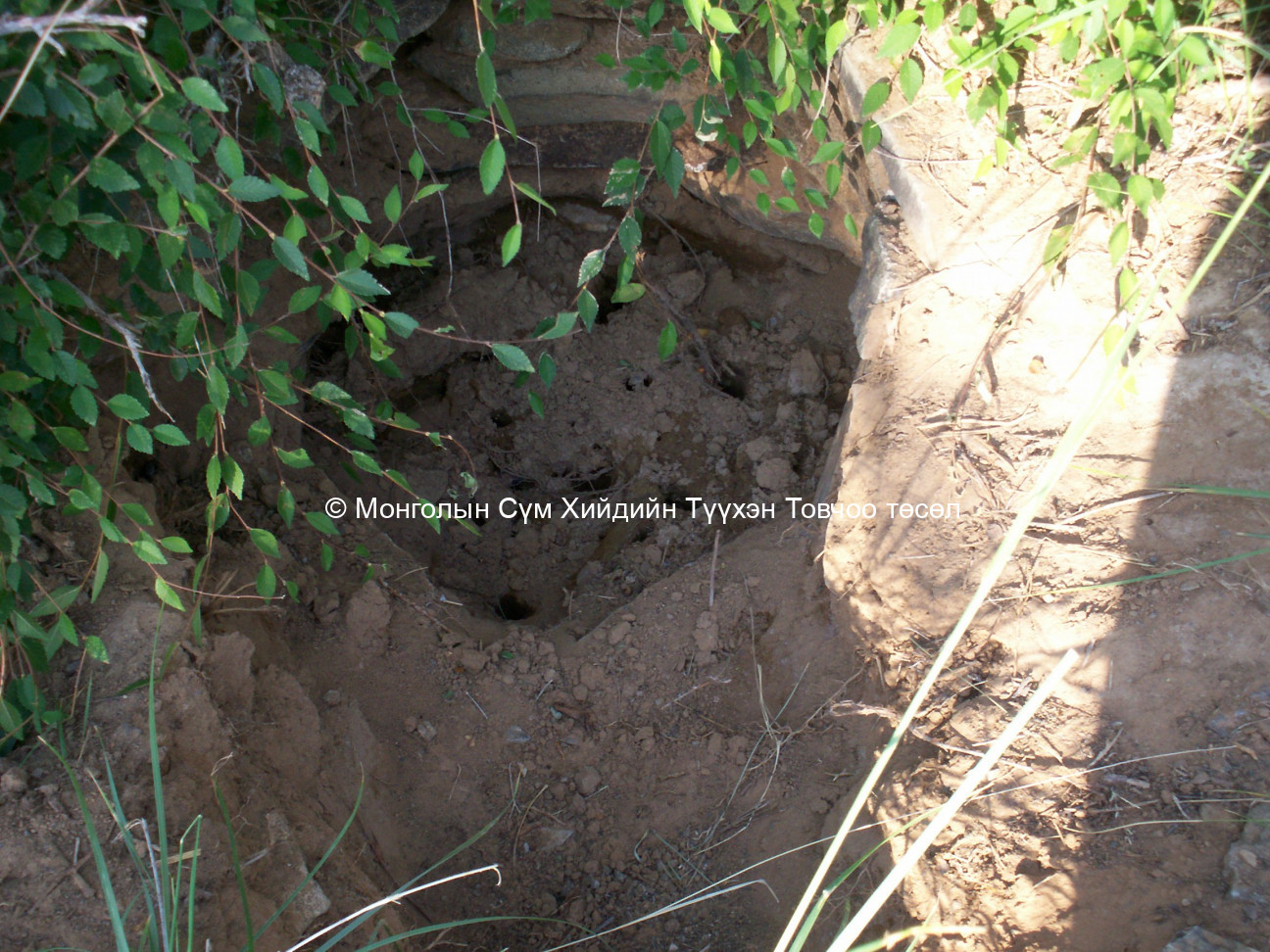
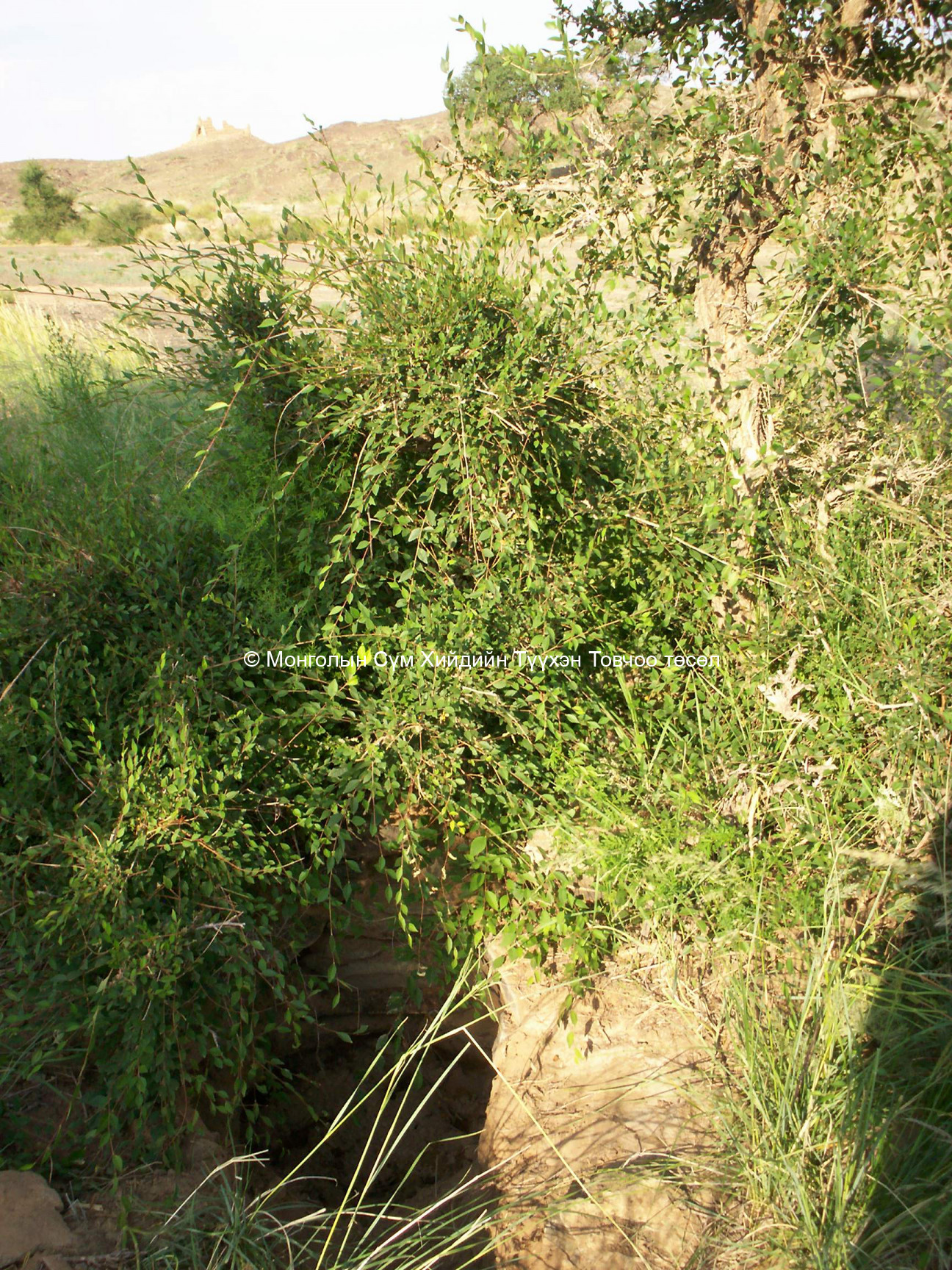
The monastery was situated on a wonderful site stretching from the top of a hill to the bank of a river. Ruins of at least 5 temples, made of bricks, are visible and a group of 5 stupas, many jas courtyards, dwellings of monks, yurts, etc. The complex consisted of 3 larger parts: one on the top of the hill on the two sides of the ovoo, one north of it and the third one in the other bank of the river. The southwest part of the complex can be considered as a centre due to its large temple buildings, courtyards and the stupa complex. There is a hill with an ovoo behind it separating this part from the monks residences. Terracotta fragments (vajra, etc.), roof tiles, bricks, pot fragments were found on the place of the temples, tsats sacred objects near the stupas, and copper equipment in the residential area. The second part is situated north of the above-mentioned first part and consisted of residences. There is an ovoo to its north. These two parts were separated from each other by a beautiful source. There are many rocks and also caves in the area, where monks could meditate. The third part of the complex is on the other bank of the river. In this section, there was a temple with courtyards and monks residences in the northern part while in the southern part there was a courtyard and another temple about 60m south of it. Red and blue bricks, everyday equipment (pots, etc.) were found on this area. As Dalai means sea or ocean the name of the monastery is reflected in its wonderful location between springs and river (which dried out unfortunately). There is a wood on the west side where probably a box or a statue, sculpture was once hidden and later dug out. This site had to be that of a real monastery, separated from people on a pleasant site.
Date of establishment of the monastery/temple :
Unknown
Date of closing and destroying the monastery :
Revival of the old monastery/temple:
No
Founder's name and title (if known):
Date of Revival:
Monks in Old Temple :
100-гаад
100
100-гаад
100
Form Number :
ДУӨЗ 060
Survey Team :
Team C

